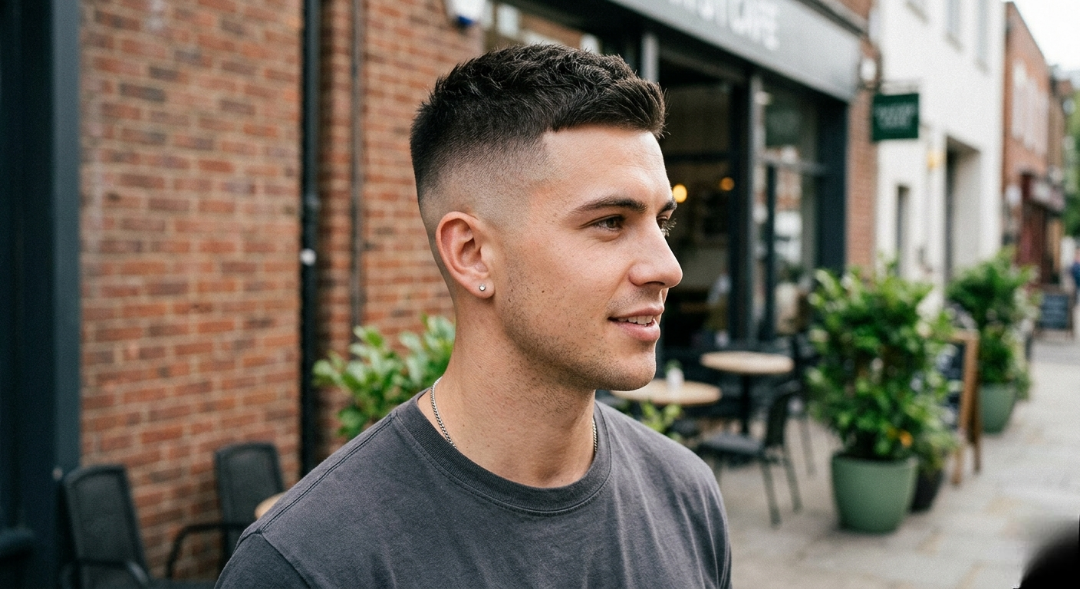
Quick Answer: A high fade is a bold men’s haircut where the blend starts above the temples and transitions to near skin length on the sides. This style requires regular trims every 10 to 14 days and works best with shorter tops ranging from 1 to 3 inches depending on texture and face shape.
When you want a haircut that commands attention and projects confidence, the high fade stands as one of the most versatile options available to guys today. This dramatic style transforms ordinary barbering into statement grooming.
The challenge most men face is understanding whether this cut suits their features, which products work best for their hair type, and exactly how to communicate with their barber. This guide covers everything you need to know.
Understanding the Fade Spectrum


Fade terminology describes the transition from longer hair on top to progressively shorter lengths on the sides and back. The three main categories differ in where this blend begins and how dramatic the contrast appears.
| Fade Type | Starting Point | Contrast Level | Maintenance Frequency |
| Low Fade | Below ear level | Subtle, blended | Every 3 to 4 weeks |
| Mid Fade | At temples | Moderate contrast | Every 2.5 to 3 weeks |
| High Fade | Above temples | Maximum contrast | Every 10 to 14 days |
What Sets the High Fade Apart


The high fade initiates its blend above the temples at the parietal ridge, creating maximum contrast compared to other fade types. This positioning produces the sharpest, most modern aesthetic.
Why Choose Sharper Contrast


Stronger contrast between sides and top creates visual drama and personality. The style suits confident personalities and works particularly well for younger guys seeking trendsetting looks. Maintenance commitment is higher, but the payoff is a consistently sharp appearance.
Matching Your Face Shape to the Right Approach


Face geometry determines how this cut interacts with your natural features. Understanding this relationship helps you choose optimal top length and texture styling.
Oval Faces: Balanced Proportions


Oval face shapes feature balanced width at the forehead, cheekbones, and jawline. This natural harmony works with virtually any fade variation, offering complete flexibility in styling choices and top length selection.
Round Faces: Creating Vertical Definition


Round faces benefit from vertical emphasis at the crown to elongate proportions. Keep the top textured and pointed upward rather than swept to the side, and opt for bolder fade contrast to slim the overall appearance.
Square Faces: Emphasizing Jaw Structure


Square jaw and cheekbones are assets worth showcasing. Pair dramatic fades with slightly longer texture on top to emphasize facial structure without overwhelming the proportions. The contrast draws eyes upward to facial features.
Heart Shaped Faces: Balancing Upper Width


Heart shapes are wider at the forehead and narrower at the chin. Add volume and texture on top to create proportion while keeping sides very short. This approach balances the natural wider upper face.
Diamond Faces: Strategic Crown Volume


Diamond shaped faces feature prominent cheekbones with narrower forehead and chin. Build volume at the crown and use textured styling to add dimension. Avoid slick back styles that emphasize cheekbone width.
Hair Texture Guide: Finding Your Perfect Match


Your natural hair type dramatically influences which styles work, which products perform, and how much daily styling effort is required. Understanding texture compatibility prevents choosing a cut that frustrates you.
Straight Hair: Clean and Defined


Straight hair displays sharp fade lines beautifully and requires minimal product for styling. Matte clay provides light texture without looking greasy. This texture works with virtually every fade variation.
Wavy and Thick Hair: Texture Management


Wavy hair needs stronger hold products to manage volume and maintain shape throughout the day. Sea salt sprays enhance natural wave patterns while strong gels lock texture in place. Choose texture crops or quiff styles over slicked back variations.
Curly and Coarse Hair: Embracing Natural Pattern


Curly hair thrives when styled to enhance rather than fight the natural curl pattern. Curl creams and define pastes work better than gel products. Keep the top between 1.5 to 2.5 inches to allow curls to form properly without appearing unkempt.
Fine Hair: Lightweight Products


Fine hair gets weighed down by heavy pomades. Texture powders and dry shampoos add grip without buildup. Shorter top lengths suit this hair type better than longer styles requiring heavy product application.
Explore more on hair cut ideas for curly hair men
Seven Style Variations with Product & Application Guide


The high fade foundation works with seven distinct style variations. Each iteration emphasizes different aesthetics and suits different lifestyles and personal preferences.
| Style Variation | Top Length | Best Products | Styling Effort |
| Skin Fade (Bald) | 1 to 1.5 inches | Matte clay, gel | Low maintenance |
| Taper Fade | 1.5 to 2 inches | Pomade, fiber | Minimal styling |
| Texture Crop | 2 to 3 inches | Texture powder, cream | Intentional messy |
| Quiff/Pompadour | 2.5 to 3.5 inches | Strong hold pomade | Daily styling |
| Slicked Back | 2 to 3 inches | Gel, pomade | Daily grooming |
| Drop Fade | 1.5 to 2.5 inches | Matte clay, paste | Moderate styling |
| Buzz Cut Combo | 0.5 to 1.5 inches | None needed | Minimal effort |
1. High Skin Fade: Maximum Impact


Clipping sides down to near bare skin creates the boldest contrast possible. This ultra short variation demands trims every 10 to 14 days to maintain definition. Pair with matte clay on the top for modern styling without product shine.
Product recommendation: Matte clay provides texture definition while keeping the look intentionally clean. Apply sparingly to damp hair for natural looking texture.
2. High Taper Fade: Refined Sophistication


Taper fades blend gradually without exposing scalp, creating refined edges ideal for professional environments. This variation suits conservative industries while maintaining modern aesthetic appeal.
Product recommendation: Pomade or fiber paste creates polished appearance. Strong hold maintains clean lines throughout workdays without appearing overdone.
3. High Fade with Texture Crop: Gen Z Statement


Combining dramatic fading with intentional messiness creates the generation defining contemporary look. This style celebrates controlled chaos rather than perfection.
Product recommendation: Texture powder or sea salt spray creates intentional separation. Apply to damp hair and work through with fingers rather than a comb.
4. High Fade with Quiff or Pompadour: Vintage Authority


Building volume at the front and sweeping backward creates timeless appeal crossing decades. This style demands daily styling commitment with strong hold products.
Product recommendation: Strong pomade or gel keeps volume locked in place. Restyle daily for consistent appearance. Apply to damp hair before drying for best results.
5. High Fade with Slicked Back: Corporate Sharpness


Smooth combed styling with dramatic fading creates professional polish for formal settings and conservative industries. This approach emphasizes grooming and structured presentation.
Product recommendation: Premium pomade with strong hold maintains sleek appearance. Apply to damp hair and use a brush to comb backward for maximum control.
6. High Drop Fade: Modern Curves


Rather than fading straight up, drop fades curve the blend behind the ears. This creates dynamic visual interest and modern interpretation of classic fading.
Product recommendation: Matte clay or fiber provides texture. The curved lines work well with textured tops rather than slicked styling.
7. High Top with Buzz Cut: Minimal Maintenance


Ultra short high tops paired with buzz cut elements create the lowest maintenance option. Perfect for athletes, active guys, and those prioritizing simplicity.
Product recommendation: No product needed. Simple water and combing maintains appearance. Consider beard grooming to offset extremely short hair.
Product Selection by Hair Type: The Complete Guide
Choosing the right product matters as much as choosing the right style. Here is the definitive breakdown of which products perform best for each hair texture.
| Hair Type | Recommended Product | Why It Works | Hold Strength |
| Straight | Matte Clay or Fiber Pomade | Defines edges cleanly, maintains texture | Medium to strong |
| Wavy/Thick | Sea Salt Spray + Strong Hold Gel | Enhances waves, controls volume | Strong |
| Curly/Coarse | Curl Cream or Define Paste | Defines curls, reduces frizz | Medium |
| Fine Hair | Texture Powder or Dry Shampoo | Adds grip without weight | Light to Medium |
Pomade vs. Clay vs. Gel vs. Powder: Understanding the Differences


Pomade offers strong hold with shine, ideal for slicked styles. Clay provides matte texture with medium hold. Gel gives maximum hold with shine for structured styles. Powder adds volume without buildup for fine hair.
Application Tips for Maximum Performance


Apply products to damp hair rather than dry. Use small amounts and distribute evenly. Work with your hands rather than tools for natural texture. Avoid applying directly to scalp.
Post Cut Maintenance Timeline


Understanding how your fade degrades over time helps you manage appearance and plan trim schedules. Hair growth patterns are predictable and manageable.
Days 1 to 7: Optimal Freshness


Immediately after cutting, your fade displays crisp lines and maximum contrast. This is the golden period for important events and photos. Minimal product maintains appearance naturally.
Days 8 to 14: Noticeable Regrowth


Visible regrowth begins appearing as hair extends approximately one quarter inch. Appearance remains presentable with daily product application and styling. This is the realistic limit before booking your next appointment.
Days 15 to 21: Blend Degradation


The fade blend becomes noticeably softer as regrowth extends further. Styles may appear less intentional. Most guys book appointments by day 14 to avoid this phase.
Frequently Asked Questions
Community members ask consistent questions about suitability, maintenance, and styling for this popular haircut. Here are authoritative answers addressing real concerns.
How Often Should You Trim to Maintain This Style?
Optimal appearance requires trims every 10 to 14 days to keep fade definition sharp. Every 2 to 3 weeks is acceptable if you prefer a slightly grown out look. Beyond 3 weeks, the fade blend noticeably softens.
Does This Style Work with Receding Hairlines?
Yes, but with modifications. If recession is mild, use this style confidently. With significant recession, emphasize texture on top rather than length. Consider a mid fade for more subtle contrast.
What Is the Difference Between High Fade and High Taper?
High fade blends down to skin or near skin at the shortest point, while high taper uses gradual blend without scalp exposure. Taper offers more subtle contrast and longer maintenance intervals.
Can You Style Without Any Product?
Straight hair looks clean and intentional without product. Wavy, curly, or thick hair requires product for proper texture control and definition throughout the day.
Is This Haircut Professional Enough for Corporate Jobs?
Yes, when styled appropriately. Slicked back or clean quiff variations work in conservative corporate settings. Avoid ultra short buzz combinations or extremely messy textures in formal industries.
Download Your High Fade Selection Checklist
Use this checklist before your barber appointment to ensure you communicate exactly what you want and understand all necessary information about your chosen style.
- Face Shape Identification: Which shape matches yours most closely?
- Hair Texture Assessment: Straight, wavy, curly, or coarse?
- Style Selection: Which of the seven variations appeals to you?
- Product Research: What products suit your texture?
- Trim Frequency: Can you commit to 10 to 14 day maintenance?
Print or save this checklist and review it before your barber appointment. Preparation ensures professional results that match your expectations.
Begin Your High Fade Transformation Today
This stylish cut commands attention while requiring commitment to regular maintenance. The dramatic contrast and modern aesthetic make it worth the investment of time and money.
Schedule your appointment with a barber who understands fade technique. Bring your reference photos, use the exact script provided, and discuss products suitable for your specific hair type.
Share your transformation in the comments section below. Which style variation did you choose? How does your barber approach high fade cutting? Your experience helps other guys make confident grooming decisions and find their perfect look.
