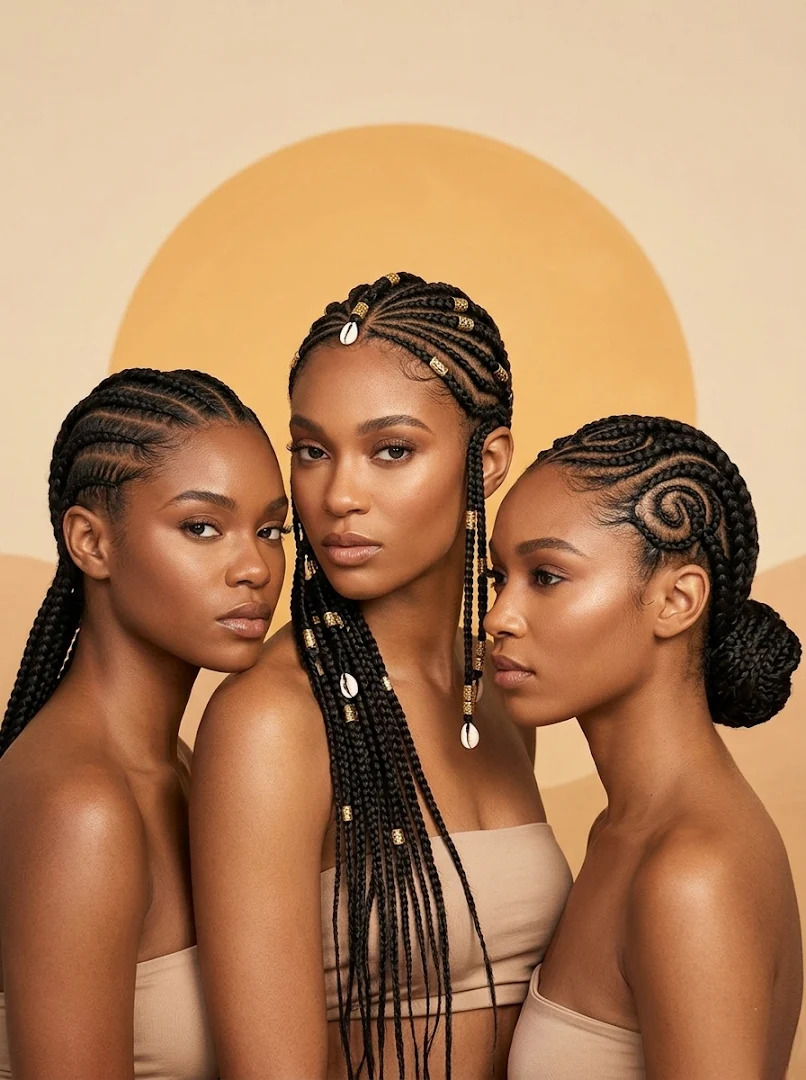
Cornrow braids for women have never gone out of style , they just keep evolving. From clean straight backs to elaborate Fulani inspired patterns, cornrows protect your natural hair while giving you one of the most versatile and expressive looks in the world of protective styling.
Quick Answer : Cornrow braids are a traditional, versatile style where hair is braided flat against the scalp in neat, continuous rows. They protect natural hair from heat and environmental damage while promoting healthy growth. This low maintenance, iconic look can be customized with various patterns, lengths, and creative designs
Whether you are getting your first set or your fiftieth, this guide covers everything from choosing the right style for your face shape to keeping your scalp healthy long after salon day. Furthermore, it addresses the specific pain points that most cornrow guides completely skip.
What Are Cornrows? (The Mechanics of the Underhand Braid)


Cornrow braids for women are a protective hairstyle where the hair is braided in an underhand technique, flat against the scalp, in continuous rows or patterns. Unlike box braids, cornrows lie flat and follow the scalp’s surface, creating structured rows that can be worn alone or used as a base for extensions and updos.
The Cultural Heritage and Modern Protective Movement


For more than three millennia, sub Saharan Africans have practiced the art of cornrowing. These elaborate braided designs served as a visual language, conveying vital information about an individual’s community alignment, age, spiritual beliefs, and standing in society.
Today, cornrow braids for women sit at the center of a global protective styling movement that prioritizes natural hair health over constant chemical and heat manipulation.
Additionally, the modern revival has brought cornrows into high fashion, with designers like Valentino and Versace featuring them on runways alongside traditional Fulani beadwork and metallic cuffs. However, the real reason women keep coming back to cornrows is simpler: they work, they protect, and they look stunning.
Cornrows vs. Box Braids vs. Goddess Plaits: Structural Differences


Understanding the structural difference helps you choose the right style for your hair health goals. Cornrows are braided flat against the scalp in an underhand pattern. Box braids are free hanging three strand plaits divided by square sections. Goddess plaits are larger, chunkier cornrows with loose, wavy extensions woven in at the ends for a soft, flowing finish.
As a result of their flat construction, cornrow braids for women offer the most scalp protection of the three. They reduce the outward pulling tension that free hanging styles create at the root, which is why trichologists often recommend them as the first protective style for women recovering from heat or chemical damage.
| Style | Best Face Shape | Install Time | Wear Time |
| Straight Backs | Oval, Square | 1 to 2 hrs | 4 to 6 weeks |
| Lemonade Side Swept | Round, Heart | 2 to 3 hrs | 4 to 6 weeks |
| Stitch Braids | All shapes | 3 to 4 hrs | 6 to 8 weeks |
| Fulani Beaded | Oval, Diamond | 3 to 5 hrs | 4 to 6 weeks |
| Feed In Low Bun | All shapes | 2 to 3 hrs | 6 to 8 weeks |
Hairline Protection: Mapping Cornrows to Your Face Shape


Different face shapes benefit from different cornrow parting directions. Round faces look more elongated with straight back cornrows. Heart shaped faces suit side swept or angled styles. Women with higher hairlines or larger foreheads benefit most from soft diagonal parts or side swept feed in angles that create a gentle frame rather than pulling hair back harshly from the face.
Flattering Hair Parts to Balance High Hairlines and Broad Foreheads


Women with a higher hairline often make the mistake of allowing their braider to start the first row directly at the hairline edge, which creates a harsh, pulled back look that emphasizes forehead width. Instead, ask for a soft diagonal part that begins slightly off center and sweeps toward the side of the head.
This parting technique, therefore, creates a natural frame that visually lowers the hairline and adds width to the sides of the face. Feed in cornrow braids are particularly effective here because they allow the braider to gradually add extension hair from about one inch back from the hairline, keeping the very front soft and natural looking.
Edge Integrity: The ‘Zero Tension’ Zone at the Temples


The temple area contains the most fragile hair on the head. Compared to the crown and nape, the hair follicles in this zone feature weaker root structures and fewer oil glands.
Consequently, any significant tension at the temples is the fastest route to traction alopecia in cornrow braids for women.
A skilled braider will always leave the first half inch of the hairline along the temples in a zero tension zone. This means the braid does not begin at the very edge but instead starts slightly inward, allowing the edge hairs to lie naturally without being locked into a tight braid base. If your braider starts pulling from the very tip of your temples, ask them to adjust.
| Edge Protection Tip: If you feel a sharp, stinging pain at your temples during installation, speak up immediately. Pain during braiding is never normal , it is a warning sign that tension is too high. |
Trendsetting Cornrow Braids Styles for Women


The five core cornrow style categories are: classic straight backs, geometric stitch braid patterns, Fulani inspired beaded designs, asymmetrical lemonade style sweeps, and multi texture ombre extension braids. Each category suits different face shapes, lifestyles, and hair textures, and all of them can be adapted with feed in extensions for added length and volume.
The Timeless Classics (Straight Backs & Feed In Low Buns)


Straight back cornrows are the foundation style. Clean parallel rows run from the front hairline to the nape, and they work on every hair type and face shape. Moreover, they install faster than any other cornrow pattern, making them the best choice for women who need a quick, low maintenance protective style.
Feed in low buns take the classic straight back and gather all rows into a sleek bun or puff at the nape. This is one of the most professional cornrow braids for women because the bun reads as polished in a corporate setting while still offering full scalp protection. Add a satin covered elastic band to reduce tension at the bun base.
Geometric & High Art Partings (Stitch Braids & Swirling Grids)


Stitch braids are straight back cornrows with a twist: the braider makes an additional horizontal stitch through each row every half inch, creating an equidistant ladder like pattern along the braid. The result is a highly geometric, ultra clean look that sits flat against the scalp with exceptional neatness.
Swirling grids take the parting pattern into artistic territory, with curved rows that spiral from a central crown point outward. Furthermore, these styles photograph brilliantly from above and are increasingly popular for events, photoshoots, and natural hair competitions. They require an experienced braider and take four to six hours to complete.
Expressive Hair Decor: Styling with Fulani Beads and Metal Accents


Fulani inspired cornrow braids for women typically feature a center part with braids sweeping back from the temples, decorated with small gold cuffs, cowrie shells, and colourful beads at braid ends. This style has deep roots in West African Fula culture and has been celebrated by artists like Beyoncé and Alicia Keys in its modern form.
Metallic cuffs and rings slide onto individual cornrow sections at any point along the braid length. They add weight and movement without damaging the braid structure. As a general rule, limit decorative accessories to the lower third of each braid to prevent root tension from the added weight.
Asymmetrical & Side Swept Silhouettes (Lemonade Vibe & Angled Bobs)


The lemonade braid style, made iconic by Beyoncé, features all cornrows swept to one side in a deep side part pattern. This asymmetrical silhouette works especially well for round and heart shaped faces because the strong diagonal line creates the illusion of a longer, more oval face shape.
Angled bob cornrows create the same visual effect with shorter braids that mimic the graduated length of a bob haircut. Braids at the front are left longer while those at the nape are shorter, creating a clean angular profile. This style is an excellent choice for professional settings where cornrow braids for women need to look structured and intentional.
Multi Texture Extensions: Integrating Colour, Ombre, and Curly Ends


Colour and texture extensions are one of the fastest growing trends in cornrow braids for women. Kanekalon extension hair in honey blonde, burgundy, and silver tones can be fed into natural black cornrows at any point during installation to create a seamless ombre gradient.
Curly ended braids are created by replacing straight braiding hair with a spiral or water wave texture for just the last couple of inches of each braid.
The result is a style that combines the clean scalp hugging structure of cornrows with a soft, voluminous curl at the ends.
Perfect for both daytime wear and night out gatherings, this versatile look ensures you remain effortlessly camera ready.
The Longevity Matrix: How Long Do Cornrows Actually Last?


Cornrow braids for women last anywhere from 1 week to 10 weeks depending on braid size, hair texture, and daily maintenance habits. Micro cornrows on type 4 natural hair last the longest. Jumbo cornrows on straight hair have the shortest wear window. The table below breaks down realistic expectations for every combination.
| Braid Type | Hair Type 4 | Hair Type 3 | Straight | Max Weeks |
| Jumbo Cornrows | 3 to 4 weeks | 2 to 3 weeks | 1 to 2 weeks | 4 weeks |
| Feed In Braids | 6 to 8 weeks | 4 to 5 weeks | 2 to 3 weeks | 8 weeks |
| Micro Cornrows | 8 to 10 weeks | 5 to 6 weeks | 3 to 4 weeks | 10 weeks |
| Stitch Braids | 4 to 6 weeks | 3 to 4 weeks | 2 to 3 weeks | 6 weeks |
These numbers assume weekly scalp moisturizing, nightly satin protection, and no heavy product build up on the braids themselves. Furthermore, women who work out daily or swim regularly should expect to reduce these timelines by one to two weeks without a consistent post activity refresh routine.
Post Salon Scalp Care & Anti Frizz Maintenance Blueprint


The three non negotiable maintenance habits for cornrow braids for women are: weekly scalp hydration with a water based spray or diluted aloe vera, a nightly silk or satin wrap to prevent friction frizz, and a post workout scalp cleansing routine using diluted witch hazel. Heavy petroleum grease clogs follicles and accelerates build up , avoid it entirely.
The Active Lifestyle: Cleansing Scalp Sweat Post Workout Without Frizz


Sweat is salty, and salt does two things to cornrow braids: it pulls moisture out of the hair shaft and leaves behind a white mineral residue that dulls your braids over time. Therefore, letting workout sweat dry in your braids repeatedly is one of the main reasons cornrows frizz and lose definition prematurely.
The most effective post workout solution is the microfiber and witch hazel method. Wrap a microfiber cloth around a wide tooth comb and dip it lightly in a solution of one part witch hazel to two parts water. Draw the wrapped comb gently along each cornrow row to lift sweat and build up without disturbing the braid structure. Follow by putting on a mesh wave cap and rinsing with cool water only, then air dry.
Liquid Hydration: Water Based Aloe Spritzing vs. Heavy Pore Clogging Greases


Cornrow braids for women need moisture delivered to the scalp, not to the braid fiber. A spray bottle filled with diluted aloe vera juice (one part aloe to three parts water) delivers lightweight moisture directly to the scalp through the part lines without weighing down the braids or causing product buildup.
In contrast, heavy petroleum based greases like blue magic or Dax sit on top of the scalp and trap dirt, sweat, and dead skin cells in the part lines. This leads to the intense itching that many women experience around day three to five after installation. Switch to jojoba oil or a water based braid spray and the difference in scalp comfort is immediate.
The Nightly Lock Routine: Silk Wraps, Durags, and Satin Bonnets


Cotton pillowcases absorb moisture and create friction that pulls apart the neatly braided edges of cornrows overnight. After just one week of sleeping on cotton without protection, the edges of cornrow braids for women begin to frizz and the hairline sections start to puff out from their flat position.
The best protection is a layered approach: apply a light moisture spray, then cover with a fitted durag to compress the braids flat, then add a satin bonnet on top for the full night. This two layer method keeps braids looking freshly installed for significantly longer than a single covering alone.
Safely Unraveling: The Post Take Down Recovery Routine


Remove cornrow braids by cutting the extension hair below the natural hair end, then unraveling each braid from tip to root using your fingers, never a comb. Apply a generous amount of water based leave in conditioner before detangling to create slip. Work in sections of four to six braids at a time to prevent root matting and mechanical breakage.
Resolving Root Matting & Product Buildup Without Mechanical Breakage


After four to eight weeks of wear, the new hair growth at the root will have naturally tangled with the base of the cornrow. Consequently, this matted root section is the most vulnerable point in the entire take down process. Rushing through it with a comb causes more breakage than anything else in the cornrow lifecycle.
Instead, saturate the root section with a detangling conditioner or a slip heavy leave in, then use your fingers to gently separate the new growth from the braid base before introducing any tool. Additionally, work in the direction of the braid, from root outward, and let the conditioner do the heavy lifting rather than forcing the comb through tangles.
The Post Braid Shedding Reality Check (Why You Aren’t Actually Balding)


When women take down cornrow braids for women after four to six weeks, they often see what looks like a large ball of loose hair and immediately panic. However, this is completely normal and is not a sign of hair loss. Human hair naturally sheds 50 to 100 strands per day as part of the growth cycle.
During a cornrow install, shed hairs cannot fall away naturally because they are locked inside the braid structure. Over six weeks, that accumulates to roughly 2,100 to 4,200 shed strands sitting inside your braids waiting to be released. When you take the braids down, all of that accumulated shedding comes out at once, which looks alarming but is simply normal daily shedding compressed into one event.
| Recovery Tip: After take down, do a 30 minute deep conditioning treatment before washing. This restores elasticity to the hair shaft before you introduce any manipulation, which dramatically reduces post braid breakage. |
Also worth reading: The Box Braids for Men Guide , If you have a partner or family member interested in protective braiding, this guide covers men’s box braid styles, scalp care, and maintenance in the same level of detail.
Frequently Asked Questions (Google Snippet Traps)
How do I relieve intense scalp tension right after braiding?
Apply a warm towel compress to the scalp for 5 minutes immediately after leaving the salon. This dilates the blood vessels near tight follicles and relieves tension pain quickly. Follow with a diluted apple cider vinegar spray along the part lines and take an over the counter anti inflammatory if the pain is severe.
Can I wash my cornrows without completely ruining the parts?
Yes. Use a mesh wave cap or stocking cap over your cornrow braids before stepping into the shower.Spray a diluted shampoo mixture through the mesh layer onto the scalp, then carefully work it in with your fingertips. Rinse with cool water only. Never use hot water on braids, as heat causes both frizz and structural swelling in extension fibers.
How much do professional cornrow braids for women cost on average?
Basic straight back cornrows cost between $60 and $120. Feed in cornrows with extensions range from $100 to $180. Intricate geometric or Fulani inspired styles with beadwork run from $150 to $300 depending on the braider’s experience and the complexity of the parting pattern. Large city salons typically charge 20 to 30 percent more than suburban or independent braiders.
What are the signs that my cornrows are causing traction alopecia?
The four early warning signs of traction alopecia from cornrow braids for women are: small follicle bumps appearing along the hairline, broken mini hairs shorter than one centi meter at the temples, a visible recession of the hairline edges after braid removal, and persistent scalp soreness lasting more than five days. Early stage traction alopecia is fully reversible if caught quickly.
Final Thoughts
Cornrow braids for women are one of the most effective protective styles available when installed correctly, maintained consistently, and removed with care. The combination of scalp protection, style versatility, and longevity makes them a genuinely practical choice for women across all hair types and lifestyles.
Follow the maintenance blueprint in this guide, respect your hairline’s zero tension zone, and your cornrows will look fresh and your scalp will stay healthy from the first day of install all the way through to take down.
